Plot twist
I don't have cancer again, and I have [many] feelings about that

Earlier this month, I announced that my cancer was back. Then, over the week that followed, I found out that it wasn’t.
I’ve been guarded in telling people about this unexpected turn of events. I didn’t want to be wrong again, especially because it’s good news. I wanted to make utterly sure that I wasn’t feeding people a miraculous plot twist that wasn’t true. I’ve also been embarrassed. I haven’t really known what to say. I haven’t had the courage to try to explain what happened and, mostly, how I feel about it.
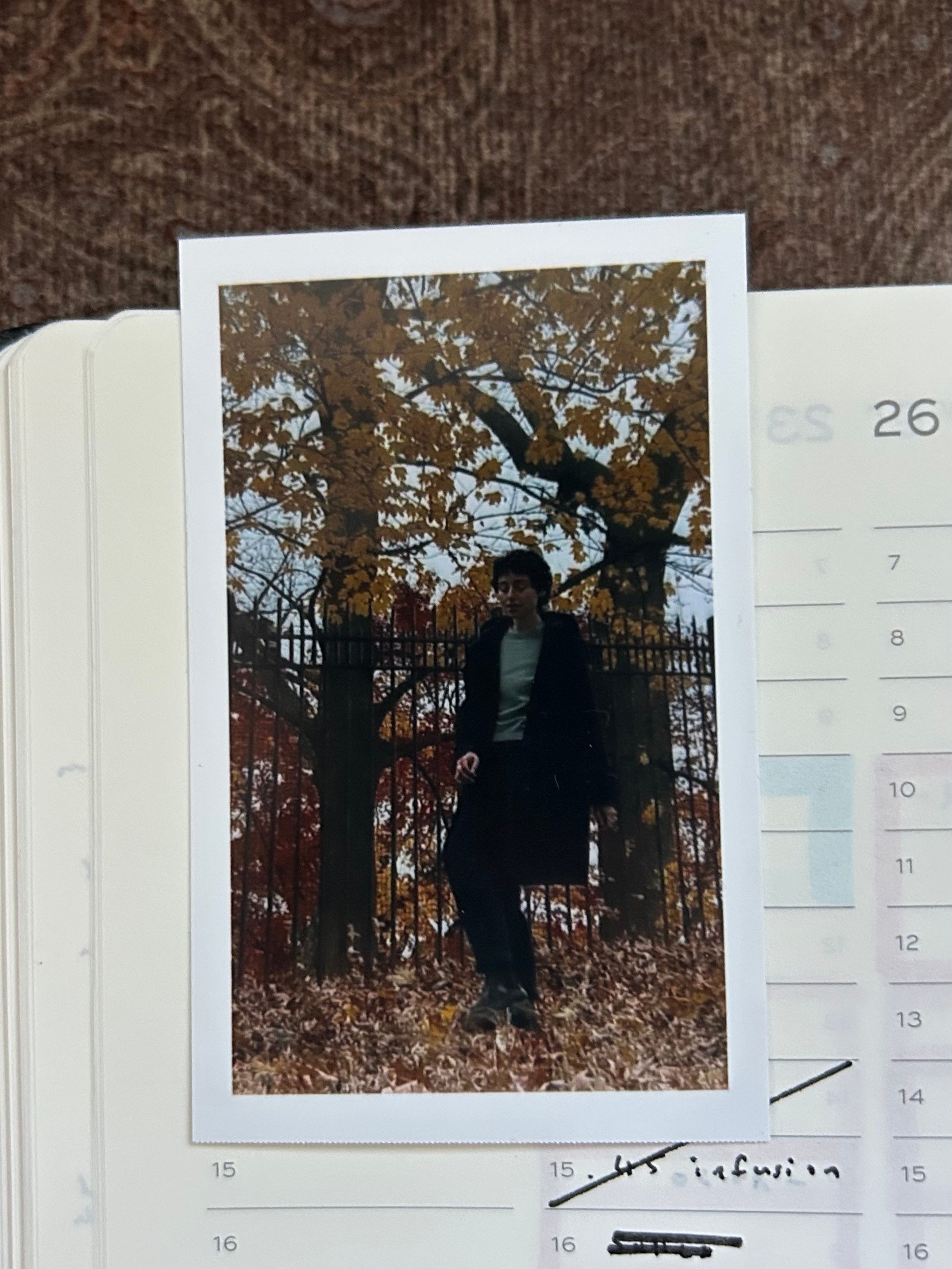
Let’s start with a brief summary of events: At the start of November, I had a PET scan three months into my remission to monitor my status. It showed a recurrent mass in the same area as my original tumor with a high uptake of the radiotracer (fluorodeoxyglucose) used to detect certain cancer cells.1 Given my history of imaging and treatments, and the obstinate nature of my disease, the new activity looked overwhelmingly like a cancer recurrence. I went in for another chest biopsy (my third); I was scheduled to start my first infusion on the 25th. At the time I made my announcement, the preliminary biopsy report had confirmed my re-diagnosis, and we were awaiting the histopathology report for a full picture of my current cancer cells in order to best target my new therapy. But, much to our surprise, there were no lymphoma cells in my tissue sample. Instead, we found that the new mass in my chest was a granuloma, an aggregation of cells that forms as an immune response. Not cancer.
Of course, I’m thrilled and relieved that I don’t have to start up treatments again. But those feelings are only now starting to take hold as I continue to sift through paralysis, exhaustion, fear, shame, anger and grief. The roller coaster of my month is a study in the complexity of cancer care, narrative and survivorship.
“I’m the dumbest girl alive”
Leading up to my PET scan, I listened to 100 gecs on repeat. Scans rile up a lot of anxiety2 for most cancer patients, and I found that the short, erratic hyperpop tracks could obliterate my spiralling thoughts. “I’m the dumbest girl alive” also struck me as wryly appropriate. The sentiment accompanied my nervy walk to the hospital, my hour alone waiting for my cells to metabolize a radioactive glucose analog, my monologue as I envisioned having to tell people about my pathetically short time in remission, my dash to reorganize my life around my impending treatment schedule. Then, it was more fitting than ever when I realized that the certainty of my recurrence was not so certain after all, and that I’d have to explain that to the masses of people who’d sent me encouragement and sympathy. The entire, convoluted enterprise of having (or not having) cancer makes me feel like the butt of the joke. Dumb if you do, dumb if you don’t.
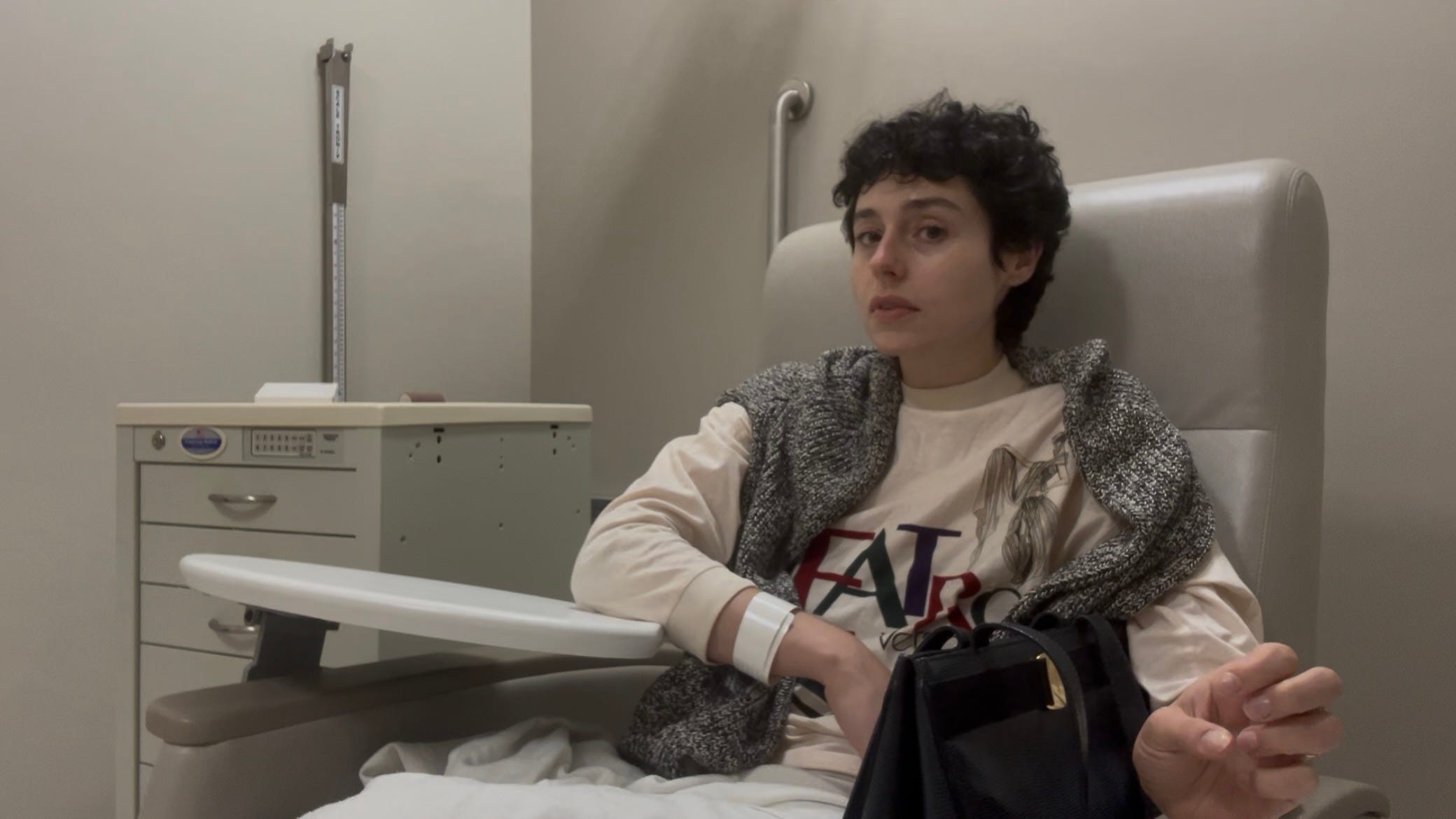
“I don’t know my own body now”
At the risk of sounding ungrateful, I want to say that remission isn’t all it’s cracked up to be. Don’t get me wrong: It’s a lot better than the alternative. But it’s also a deeply unstable and destabilizing state. There’s a tremendous amount of aftermath to tend to after a long span of aggressive treatments. You’re not magically normal — physically or mentally — once you reach that coveted complete remission, and your hard-won, imperfect freedom can be stripped away with one bad scan. Not long after I entered remission, I started learning the music for the opera I’m currently rehearsing, What to wear, with a libretto by Richard Foreman and music by Michael Gordon. One of the sections captured my new, tender reality perfectly:
I don’t know what kind of movements to make now
I don’t know what kind of alphabet to use now
I don’t know my own strength
I don’t know my awkwardness and my genius now
I don’t know my own stupidity now
I don’t know my own limits now
I don’t know my own body now
My doctor and I went over my new treatment plan hours before I started music rehearsals for this production; I started staging this scene just as I discovered that my body had surprised us doubly, not with a rapid relapse but with an improbable fake-out. The text was freshly resonant all over again.
I’m proud that I’ve managed not to resent my body in my cancer. My first reaction when I believed I had a recurrence was not a feeling of betrayal by my body but rather a surge of love and compassion for it — that is, for myself. I wanted to hold this imperfect body and care for it. But within the safety of remission, now that I no longer have to focus so much of my energy on staying positive and staying alive, I feel less charitable. I’m awkward, unsure, frustrated. I’m angry that I still take medication twice daily, that parts of my body don’t – and may never again – function normally, that I have follow-up appointments and that I can’t shake the shadow of cancer yet. I’m angry that I ever had cancer.
There’s an extra layer of complication caused by my decision to live my cancer publicly. I’m glad I have (and I don’t think I could have done it any other way), but I do feel pressure to organize the uncertain facts of my body into an understandable narrative. Often, that narrative eludes me. There are no promised outcomes, no obvious reactions. Just best probabilities, plotting and re-plotting. I felt like a fool announcing that my cancer had come back (I was supposed to be done! I rang the bell! everyone celebrated my victory!) and I feel like a fool announcing that my cells tricked us all again.
But I’d rather be a fool with no active cancer, and I’m sure you prefer this for me, too, dear reader. Thank you for following the highs and lows of my personal opera. I hope I’ll have no more dramatic twists to report, but I make no promises.
“FDG avid” areas can mean an active cancer or a benign inflammatory response, and interpreting a particular scan must be done within the context of a patient’s overall disease narrative.
“Scanxiety” is the portmanteau term for this particular sensation.
Man oh man… First and foremost, I’m so very glad to be reading that this was a “fake-out”. But your description of what being in remission, or cured, might look like, and does look like for you… That sounds intense. Unsettling. A small comfort. I just wish for you to be well. To be happy. To feel a sense of peace. I feel really sad that you may have felt (feel) foolish in making any announcements or giving updates. How could you know? “They” didn’t even know. 🫤. Be gentle and kind to yourself (not that I would ever be so churlish as to tell you what to do!!). And as always, hold fast. 💪 We are all better for your bright and shiny splendiferousness Sophie ⭐️☀️
I’m positive everyone is delighted by this turn of events and absolutely no one has any expectations of a tidy narrative. I think people who have experienced cancer may know the rollercoaster it can be, and the people who are experiencing it for the first time via you right now are learning how much of an emotional toll it can take in a myriad of ways. You’re brave for sharing your experience publicly and for showing up for yourself. Cancer can’t handle you! It better not come back after it’s seen how well defended you are!!